About Us
Who We Are
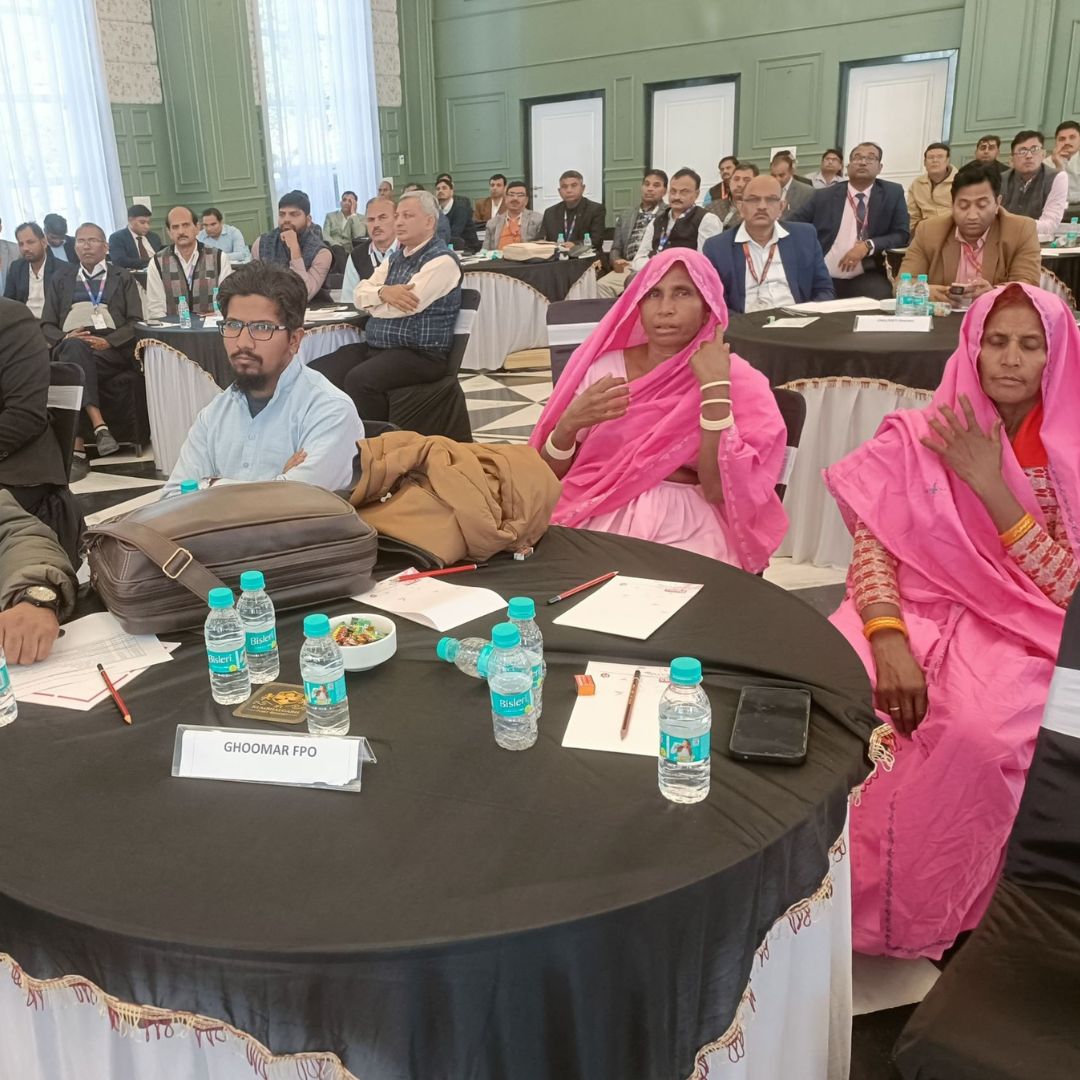
Ghoomar Mahila Samiti is a tribal women-led organization that aims to uplift the entire community in Rajasthan through sustainable development and empowerment.
- Sustainability Focus
- Collaboration with Govt
- Holistic Development Approach
- Advocacy and Support
Key Achievements
Initially, women elected as Sarpanchs seldom exercised their authority, often overshadowed by male relatives. GMS's leadership training has changed this narrative. An exemplary case is Rinku Devi, an SHG member and Sarpanch of Thandiberi, who now actively participates in Gram Panchayat meetings and independently manages her responsibilities.
When GMS began its work, local diets were limited to maize chapatis and chili chutney, lacking essential nutrients. Through focused agriculture and health awareness programs, many families now cultivate kitchen gardens, consume a variety of vegetables, and sell surplus produce for additional income.
Initially, illiteracy was
prevalent among GMS members, prompting a push for proper education for their
children, particularly girls. Today, the enrollment ratio of girls in schools
has increased significantly. Additionally, all members have learned to sign
their names, replacing thumb impressions in meetings.
Recognizing the
detrimental impact of alcohol, GMS organized a 20 km walk rally to draw
government attention. Despite persistent liquor shops, alcohol consumption
among SHG families has plummeted from nearly 90% to minimal levels. Members
have ceased home-brewing and selling alcohol, drastically reducing its presence
in their communities.
During the financial strain of COVID-19, GMS distributed 500 ration kits, each
worth Rs. 1200, from its corpus. Initially, vaccination rates were below 10%
due to rumors and superstition. GMS collaborated with the World Health
Organization (WHO) to launch an awareness campaign involving wall paintings,
mic announcements, and door-to-door outreach. By leading through example, GMS
increased the vaccination rate to 85%.
Banking and
administrative tasks required multiple trips to distant villages, burdened by
language barriers and high charges. In response, GMS established the Ghoomar
Information Center, providing banking services, legal consultations, and
eMitra/CSC facilities. Over two years, the center facilitated transactions
worth Rs. 1.3 crore and served 2,000 members.
Founded in 2015, this
Farmer Producer Company (FPC) boasts 2,000 shareholders and specializes in a
variety of non-timber forest products. The FPC's product range includes custard
apple pulp, jamun pulp, ber sticks, herbal gulal, and biodegradable plates. By
focusing on these niche products, the company supports sustainable forest
management and adds value to forest produce. The FPC provides year-round
employment to 2,000 families, generating an average annual income of Rs. 40,000
to Rs. 50,000 per family. This steady income significantly enhances the
livelihoods of these families, contributing to the socio-economic development
of the region. In the fiscal year 2023- 24, the FPC achieved remarkable
financial success with sales reaching Rs. 1 crore. A significant portion of
this revenue came from the production of 55 metric tons (MT) of custard apple
pulp, highlighting the company's capacity for large-scale production and its
effectiveness in processing and marketing forest products. This impressive
performance underscores the FPC's role in driving economic growth and its
potential for further expansion in the non-timber forest product sector.
The MEDP program focuses
on non-timber forest produce, offering participants a 15-day training on value
addition processes. During this period, they learn about enhancing the value of
products such as custard apple pulp, jamun pulp, ber sticks, and herbal gulal.
With support from NABARD, 120 members received training under the Micro Enterprise
Development Program, enabling them to generate an additional Rs. 30-40k
annually.
Twenty-five members participated in an online training program focused on product marketing and e-commerce. This training equipped them with essential skills in digital marketing strategies, social media management, and online sales techniques. Participants learned how to effectively promote their products on various digital platforms, utilize data analytics to target their audience more precisely, and optimize their e-commerce websites for better user experience and higher conversion rates. They also gained insights into customer relationship management and the importance of building a strong online brand presence. As a result, these members are now better prepared to navigate the competitive online marketplace and drive sales growth for their businesses.
LEDP is a livestock
training program that provides 10 days of intensive training related to
livestock management. The training focuses on several key areas: understanding
and managing goat diseases, reducing mortality rates, increasing the weight of
bucks, and maintaining hygiene in livestock areas. Under the LEDP program, 120
members received comprehensive training, leading to significant improvements in
goat-rearing practices. The deworming rate increased, resulting in a
commendable reduction in the mortality rate from a concerning 25% to a
promising 15%. Furthermore, the adoption of proper castration techniques
contributed to a remarkable increase in the average weight of each goat by 5-7
kg. Additionally, the annual income of the goat rearers increased by
approximately 12,000 after the training.